Showing posts with label candace fleming. Show all posts

Sunday, August 29, 2021

On the Day I Died

If you'd asked me back when I read Fatal Throne if I would read a book by the author that wrote Catherine of Aragon's random-Spanish-peppered chapter, I would have said no way. 

However, after skimming the works of all the authors, one of her books was the only one that jumped out at me as something I wanted to check out. And it was surprisingly great. 

This is an anthology of stories told by ghosts. The book begins in the present with a teen driving a car. He picks up a hitchhiker, takes her to her house, notices the saddle shoes she left in the car, goes back to the house, and is told he's driven a ghost home. Instead of him going to a cemetery to find his jacket as happens a lot, he's told to take the shoes to her grave if he wants to return them to her. He ends up finding a cemetery for teenagers...and a huge pile of saddle shoes by this girl's grave. I really enjoyed that detail. That the shoes weren't ghostly, but instead accumulated on this girl's grave, one pair returned to her each year. 

Now that he's in the cemetery though, all the other ghosts rise and want to share their stories. Each one takes place around Chicago where the cemetery is and during different years. 

Gina 1964: An Italian-American girl likes to spin untruths so when she tries to tell about her new classmate and his love of arson, she's not believed. I enjoyed this one, mostly because I liked Gina as a character. 

Johnnie 1936: Kid during the depression plays a trick on a spooky old teacher that accidentally leads to her death. He ends up becoming a runaway and gets into petty crime. Then he gets the idea to rob dead bodies in funeral homes, comes across this former teacher's, and learns why it's not a good idea to challenge anyone whose specialty is "Sumerian witchcraft." I enjoyed this one, too, though it was more because the annoying kid got what he deserved. And the idea of Sumerian witchcraft is just fun. 

Scott 2012: Know-it-all skeptic photographer wants to do a photo project in an abandoned asylum. Another annoying protagonist who gets what he deserves, though points off for it not being in an interesting way at all. 

David 1958: This one was so random. It's like a comic sci-fi horror story. I hated it because it felt so out of place with the others. 

Evelyn 1893: Set during the World's Fair, Evelyn and her twin sister are checking it out. Her sister is gorgeous and she's plain, plus the sister is also a bitch. Evelyn gets away from her and goes to a closed off floor of one exhibit building only to find an evil mirror that likes to suck in people who represent the seven deadly sins. This one was fun. I like haunted mirror stories, though no one will ever do it as well as Stephen King. 

Lily 1999: Shakespeare-obsessed girl, her boyfriend and her boyfriend's little brother in a retelling of The Monkey's Paw. I didn't hate this, but The Monkey's Paw is so well-known that it just didn't feel necessary. 

Rich 1981: Cool kid and his nerdy friend find a demonic hood ornament. Not the best but not horrid. I feel like there were some elements borrowed from Stephen King's "Mrs. Todd's Shortcut."

Edgar 1870: Mentally ill boy abused by father. Edgar Allen Poe's "Berenice" meets "The Yellow Wallpaper." I liked the fusion.

Tracy 1974: Girl is sent to briefly stay with her great aunt only to have said aunt be an ex-gangster. Not great, not awful. 

I liked the different assortment of time periods and situations so much that the overall picture of the book somehow holds up better than each individual story. If you like horror anthologies written for younger audiences, give this one a try. 

Saturday, August 28, 2021

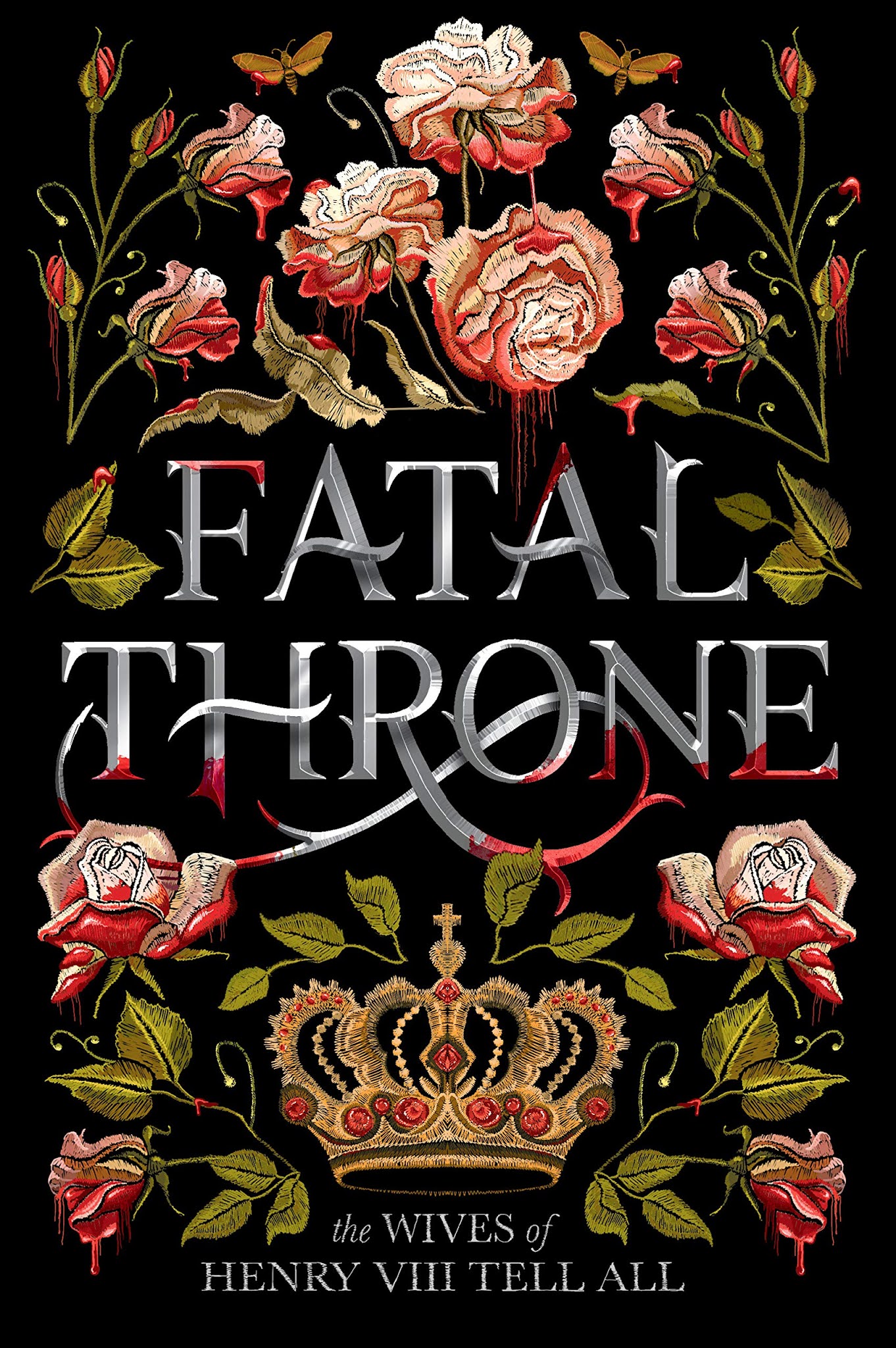
Fatal Throne

Ah, the six wives of Henry VIII. For some reason, they're my favorite Euro-based, non-Classical historical topic. I don't know why. Maybe because they're all so different yet trapped as victims of the royal system. 

This is a historical fiction book from seven points of view written by seven authors. 

M. T. Anderson writes as Henry VIII after each chapter from the PoV of a wife. Candace Fleming is Katharine of Aragon, Stephanie Hemphill does Anne Boleyn. Lisa Ann Sandell is Jane Seymour. Jennifer Donnelly tackles Anna of Cleves and Linda Sue Park is Catherine Howard. Deborah Hopkinson writes Kateryn Parr. (They varied the spellings of the Catherines to be less confusing. Though why not just use Catalina for Catherine of Aragon? It was her actual name.)

What do all those authors have in common? Pretty sure I've never heard of any of them. Oh, wait, no, Park wrote Prairie Lotus. I know one of them.

We start with Catherine of Aragon and I've only made it through her and Anne Boleyn and barely started Jane Seymour, but I can't imagine any of the sections being as annoying as Catherine's. Why? Because the author decided it would be super realistic for her to random insert Spanish phrases into practically everything. Maybe prayers I could accept, but everything? No. It sounds stupid. Catherine writes from the day she decides to fight for herself and Mary by defying the king no matter what. She flashes back to her younger days, but her story isn't ended in any of the sections. I think Anne only briefly mentions that she dies destitute and alone. I normally rather like Catherine of Aragon, but this was not her best portrayal.

The interludes by Henry between chapters are as annoying and pompous as anything you'd expect from his PoV.

Then we move to Anne Boleyn. I wonder if the authors discussed it ahead of time, but she drops French into her thoughts and speech, too, though not nearly as often as Catherine. Anne's chapter is different because it entirely takes place during her last few days with only a couple full-on flashbacks. Most of her telling of the past is her recounting it. Anne is always hard for me because she wasn't a nice person, but she also didn't deserve to die on false charges of horrible things. 

Jane Seymour's chapter is brief, as was her marriage. She's likeable, but plays the game as well as Anne, just in her own way. 

Now Anne of Cleves. That's my girl and her chapter was no disappointment. There's but a little German in it and it's only in logical places. She tells her story herself, some to a servant girl and the rest in flashbacks brought on by the painkillers given to her as she endures the final days of her battle with cancer. There's a little bit of A Christmas Carol quality to it, because some of these drug-induced flashbacks are led by an assortment of the dead, like a childhood friend, Hans Holbein and Thomas Cromwell. It's easily the best chapter so far and I won't be surprised if it's the best of the entire book.

Catherine Howard's chapter is, not surprisingly, the most sexual. She's presented as mostly endearing though. She's honestly just not that bright which is why she doomed herself. This is the one author I've read before and I like how she handled this. I'd read more of her books.

Gah, I thought I finished this and forgot. Catherine Parr has always been the least interesting one to me, even though she was arguably the most intellectual. Maybe it's because she comes at the tail end, maybe it's because her story hasn't been presented as well in anything I've watched or read. Certainly she had an interesting life. I think the issue is that she's always presented in terms of her relationship with Henry or her relationship with Elizabeth and less often on her own. This tried to do that, but it ended up falling flat. 

Overall, I quite enjoyed this and would reread it eventually. Check it out if you're into the Tudors at all.